MA+P MA+P
Visit the School of Cinematic Arts website

Projects

In The Wild

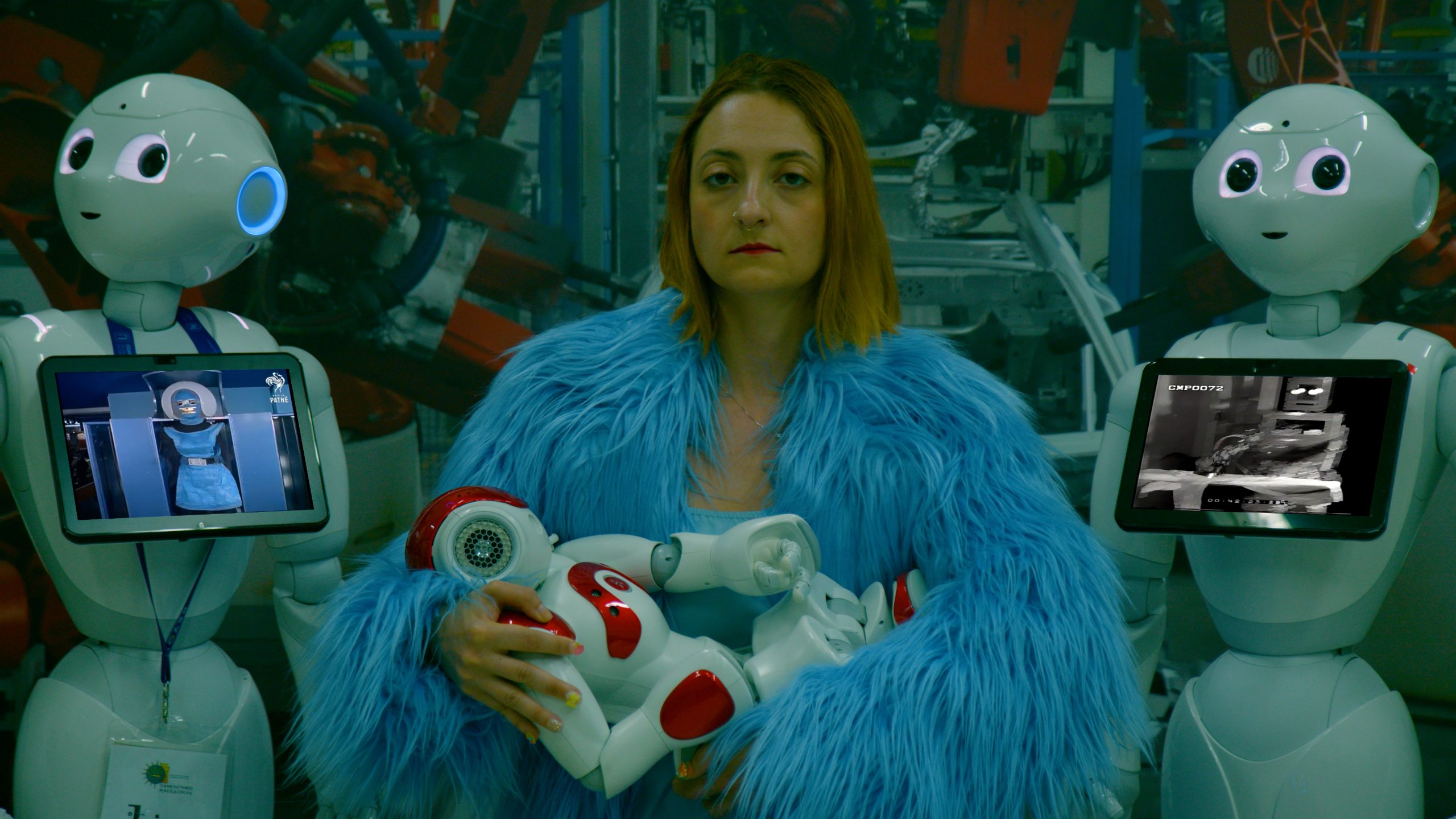
In The Wild is a film installation about looking and looking back. It stages an encounter between humans, robots, and wetland creatures, and lets their edges leak into each other to imagine a queer way of experiencing planetary connection and relation. The film questions, in poetic and enigmatic ways, how our technologies are shaping the ways we are seeing, knowing, and naming the world. It moves through and against the binary of the natural and the artificial, searching for a softness that comes through an unfolding of time, through back and forth, distance and proximity, a kind of vertigo driven by affection and curiosity.

Part of the film remixes an archive of old and new robotic advertisements, where the language keeps repeating itself: control, efficiency, eugenics. Robots appear as tireless helpers, women as attendants; automation is constantly tied to comfort, cleanliness, consumer ease. Through this repetition, the robotic imaginary shows its heteronormative and colonial histories, the same scripts looping through time. Underneath, there is always the question: who performs the invisible labor of care that becomes the ghost in the machine? Who is seen as fully human, and who is not?

In robotics and HRI, “in the wild” describes robots that leave the lab and enter so-called real-world environments: homes, streets, care facilities. The phrase assumes that everything beyond the lab is a kind of wilderness, and yet these “wild” experiments remain tightly scripted and limited, designed to measure compliance, success, failure.

Wildness here is not untouched nature but an unruly relation between humans, robots, and wetlands that refuses to be fully disciplined. I think of this project as post-cinematic softness: slowing down, getting lost a bit, sensing instead of resolving, glitching, non-linear time, the poor image.

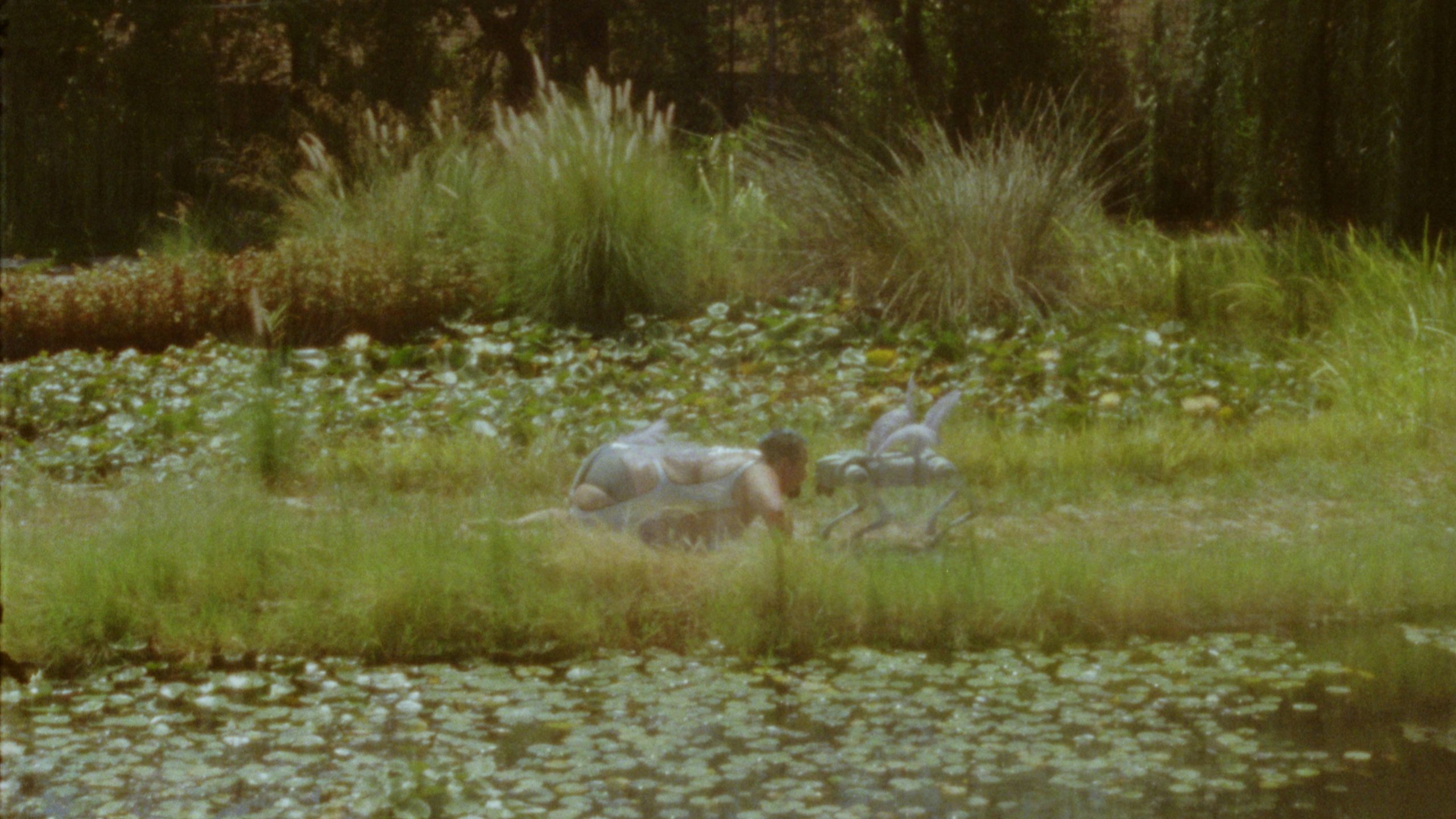
In The Wild is a film installation about looking and looking back. It stages an encounter between humans, robots, and wetland creatures, and lets their edges leak into each other to imagine a queer way of experiencing planetary connection and relation. The film questions, in poetic and enigmatic ways, how our technologies are shaping the ways we are seeing, knowing, and naming the world. It moves through and against the binary of the natural and the artificial, searching for a softness that comes through an unfolding of time, through back and forth, distance and proximity, a kind of vertigo driven by affection and curiosity.

Part of the film remixes an archive of old and new robotic advertisements, where the language keeps repeating itself: control, efficiency, eugenics. Robots appear as tireless helpers, women as attendants; automation is constantly tied to comfort, cleanliness, consumer ease. Through this repetition, the robotic imaginary shows its heteronormative and colonial histories, the same scripts looping through time. Underneath, there is always the question: who performs the invisible labor of care that becomes the ghost in the machine? Who is seen as fully human, and who is not?

In robotics and HRI, “in the wild” describes robots that leave the lab and enter so-called real-world environments: homes, streets, care facilities. The phrase assumes that everything beyond the lab is a kind of wilderness, and yet these “wild” experiments remain tightly scripted and limited, designed to measure compliance, success, failure.

Wildness here is not untouched nature but an unruly relation between humans, robots, and wetlands that refuses to be fully disciplined. I think of this project as post-cinematic softness: slowing down, getting lost a bit, sensing instead of resolving, glitching, non-linear time, the poor image.
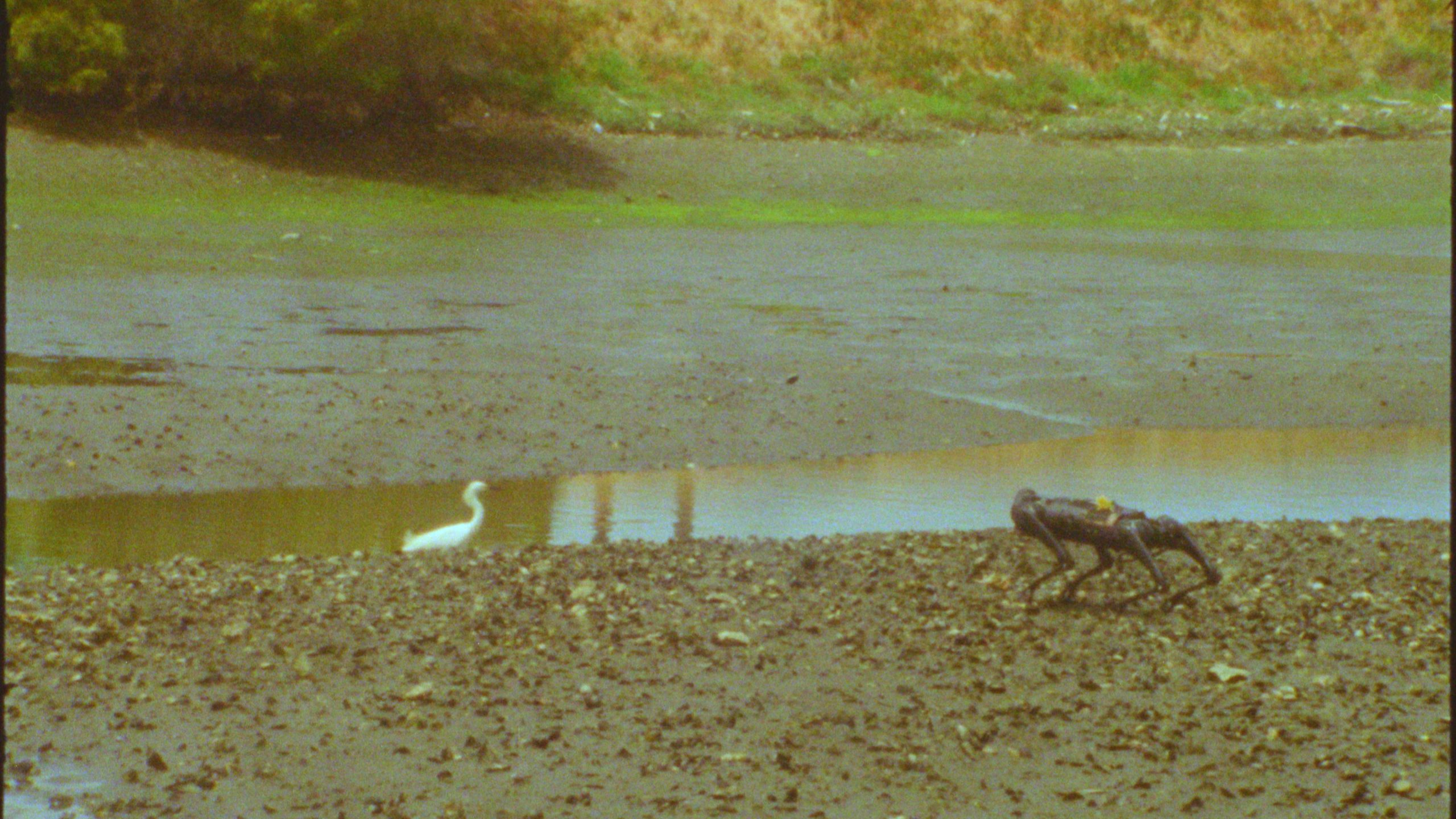
In The Wild is a film installation about looking and looking back. It stages an encounter between humans, robots, and wetland creatures, and lets their edges leak into each other to imagine a queer way of experiencing planetary connection and relation. The film questions, in poetic and enigmatic ways, how our technologies are shaping the ways we are seeing, knowing, and naming the world. It moves through and against the binary of the natural and the artificial, searching for a softness that comes through an unfolding of time, through back and forth, distance and proximity, a kind of vertigo driven by affection and curiosity.

Part of the film remixes an archive of old and new robotic advertisements, where the language keeps repeating itself: control, efficiency, eugenics. Robots appear as tireless helpers, women as attendants; automation is constantly tied to comfort, cleanliness, consumer ease. Through this repetition, the robotic imaginary shows its heteronormative and colonial histories, the same scripts looping through time. Underneath, there is always the question: who performs the invisible labor of care that becomes the ghost in the machine? Who is seen as fully human, and who is not?

In robotics and HRI, “in the wild” describes robots that leave the lab and enter so-called real-world environments: homes, streets, care facilities. The phrase assumes that everything beyond the lab is a kind of wilderness, and yet these “wild” experiments remain tightly scripted and limited, designed to measure compliance, success, failure.

Wildness here is not untouched nature but an unruly relation between humans, robots, and wetlands that refuses to be fully disciplined. I think of this project as post-cinematic softness: slowing down, getting lost a bit, sensing instead of resolving, glitching, non-linear time, the poor image.

In The Wild is a film installation about looking and looking back. It stages an encounter between humans, robots, and wetland creatures, and lets their edges leak into each other to imagine a queer way of experiencing planetary connection and relation. The film questions, in poetic and enigmatic ways, how our technologies are shaping the ways we are seeing, knowing, and naming the world. It moves through and against the binary of the natural and the artificial, searching for a softness that comes through an unfolding of time, through back and forth, distance and proximity, a kind of vertigo driven by affection and curiosity.

Part of the film remixes an archive of old and new robotic advertisements, where the language keeps repeating itself: control, efficiency, eugenics. Robots appear as tireless helpers, women as attendants; automation is constantly tied to comfort, cleanliness, consumer ease. Through this repetition, the robotic imaginary shows its heteronormative and colonial histories, the same scripts looping through time. Underneath, there is always the question: who performs the invisible labor of care that becomes the ghost in the machine? Who is seen as fully human, and who is not?

In robotics and HRI, “in the wild” describes robots that leave the lab and enter so-called real-world environments: homes, streets, care facilities. The phrase assumes that everything beyond the lab is a kind of wilderness, and yet these “wild” experiments remain tightly scripted and limited, designed to measure compliance, success, failure.

Wildness here is not untouched nature but an unruly relation between humans, robots, and wetlands that refuses to be fully disciplined. I think of this project as post-cinematic softness: slowing down, getting lost a bit, sensing instead of resolving, glitching, non-linear time, the poor image.
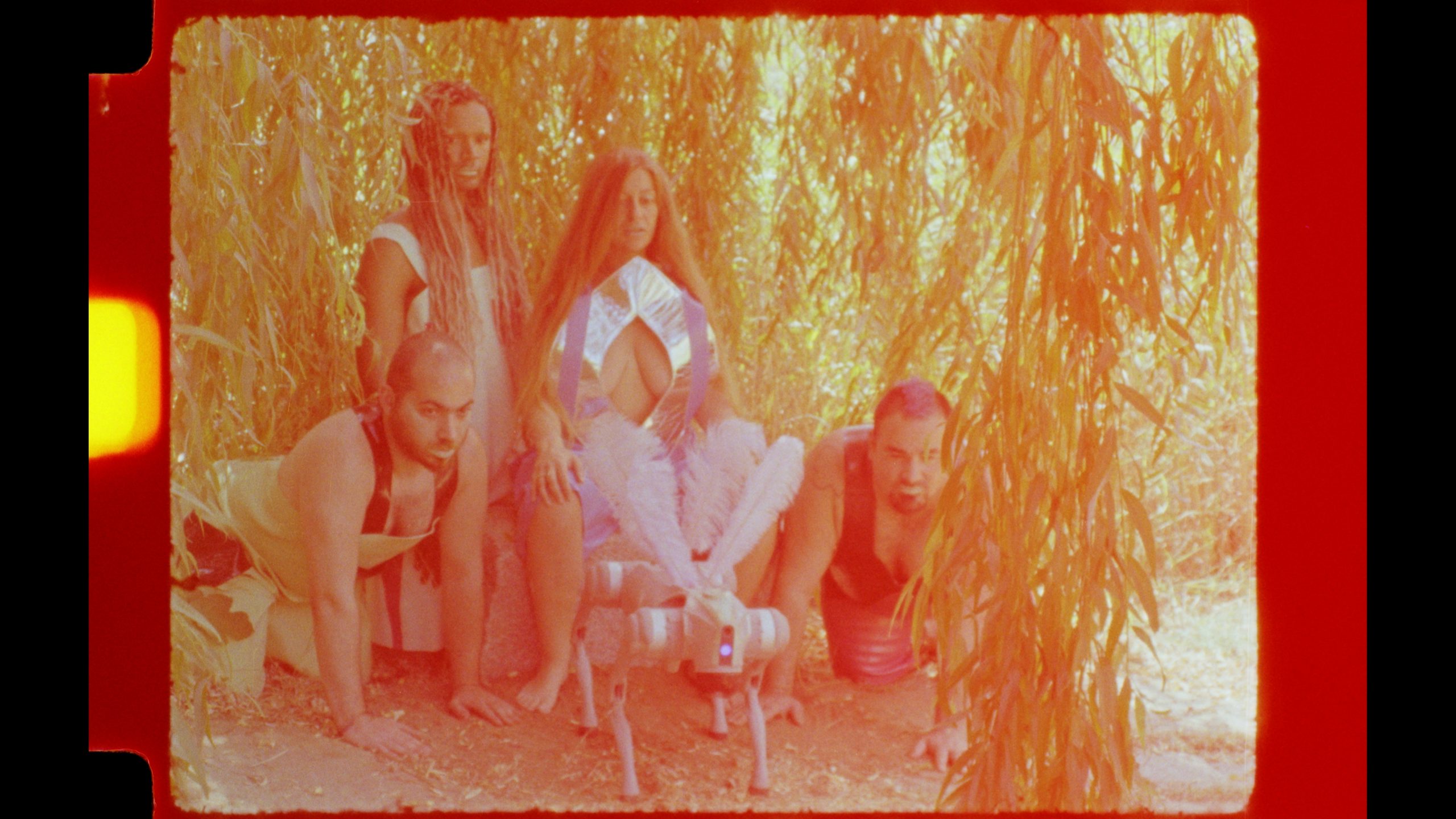
In The Wild is a film installation about looking and looking back. It stages an encounter between humans, robots, and wetland creatures, and lets their edges leak into each other to imagine a queer way of experiencing planetary connection and relation. The film questions, in poetic and enigmatic ways, how our technologies are shaping the ways we are seeing, knowing, and naming the world. It moves through and against the binary of the natural and the artificial, searching for a softness that comes through an unfolding of time, through back and forth, distance and proximity, a kind of vertigo driven by affection and curiosity.

Part of the film remixes an archive of old and new robotic advertisements, where the language keeps repeating itself: control, efficiency, eugenics. Robots appear as tireless helpers, women as attendants; automation is constantly tied to comfort, cleanliness, consumer ease. Through this repetition, the robotic imaginary shows its heteronormative and colonial histories, the same scripts looping through time. Underneath, there is always the question: who performs the invisible labor of care that becomes the ghost in the machine? Who is seen as fully human, and who is not?

In robotics and HRI, “in the wild” describes robots that leave the lab and enter so-called real-world environments: homes, streets, care facilities. The phrase assumes that everything beyond the lab is a kind of wilderness, and yet these “wild” experiments remain tightly scripted and limited, designed to measure compliance, success, failure.

Wildness here is not untouched nature but an unruly relation between humans, robots, and wetlands that refuses to be fully disciplined. I think of this project as post-cinematic softness: slowing down, getting lost a bit, sensing instead of resolving, glitching, non-linear time, the poor image.

In The Wild is a film installation about looking and looking back. It stages an encounter between humans, robots, and wetland creatures, and lets their edges leak into each other to imagine a queer way of experiencing planetary connection and relation. The film questions, in poetic and enigmatic ways, how our technologies are shaping the ways we are seeing, knowing, and naming the world. It moves through and against the binary of the natural and the artificial, searching for a softness that comes through an unfolding of time, through back and forth, distance and proximity, a kind of vertigo driven by affection and curiosity.

Part of the film remixes an archive of old and new robotic advertisements, where the language keeps repeating itself: control, efficiency, eugenics. Robots appear as tireless helpers, women as attendants; automation is constantly tied to comfort, cleanliness, consumer ease. Through this repetition, the robotic imaginary shows its heteronormative and colonial histories, the same scripts looping through time. Underneath, there is always the question: who performs the invisible labor of care that becomes the ghost in the machine? Who is seen as fully human, and who is not?

In robotics and HRI, “in the wild” describes robots that leave the lab and enter so-called real-world environments: homes, streets, care facilities. The phrase assumes that everything beyond the lab is a kind of wilderness, and yet these “wild” experiments remain tightly scripted and limited, designed to measure compliance, success, failure.

Wildness here is not untouched nature but an unruly relation between humans, robots, and wetlands that refuses to be fully disciplined. I think of this project as post-cinematic softness: slowing down, getting lost a bit, sensing instead of resolving, glitching, non-linear time, the poor image.

In The Wild

Antigoni Tsagkaropoulou
2025
Installation, Video

In The Wild is a film installation about looking and looking back. It stages an encounter between humans, robots, and wetland creatures, and lets their edges leak into each other to imagine a queer way of experiencing planetary connection and relation. The film questions, in poetic and enigmatic ways, how our technologies are shaping the ways we are seeing, knowing, and naming the world. It moves through and against the binary of the natural and the artificial, searching for a softness that comes through an unfolding of time, through back and forth, distance and proximity, a kind of vertigo driven by affection and curiosity.

Part of the film remixes an archive of old and new robotic advertisements, where the language keeps repeating itself: control, efficiency, eugenics. Robots appear as tireless helpers, women as attendants; automation is constantly tied to comfort, cleanliness, consumer ease. Through this repetition, the robotic imaginary shows its heteronormative and colonial histories, the same scripts looping through time. Underneath, there is always the question: who performs the invisible labor of care that becomes the ghost in the machine? Who is seen as fully human, and who is not?

In robotics and HRI, “in the wild” describes robots that leave the lab and enter so-called real-world environments: homes, streets, care facilities. The phrase assumes that everything beyond the lab is a kind of wilderness, and yet these “wild” experiments remain tightly scripted and limited, designed to measure compliance, success, failure.

Wildness here is not untouched nature but an unruly relation between humans, robots, and wetlands that refuses to be fully disciplined. I think of this project as post-cinematic softness: slowing down, getting lost a bit, sensing instead of resolving, glitching, non-linear time, the poor image.
×
ACCESSIBILITY
DESATURATE
Less intense colors.
COGNITIVE DISABILITY
Zoom in, important elements highlighted.
LOW VISION
Zoom in, more intense colors.
ADHD FRIENDLY
Zoom in, more intense colors, reading mask.